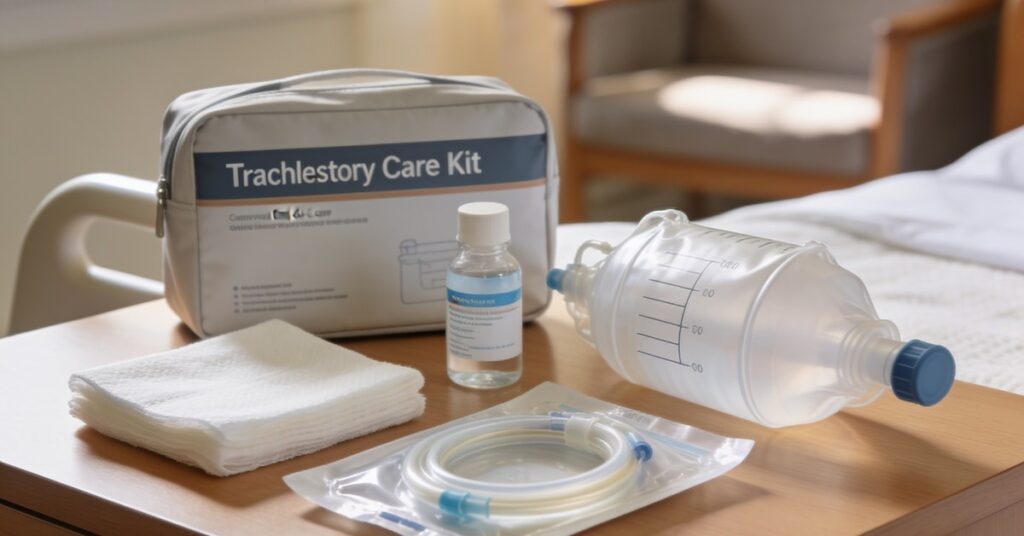
Providing Tracheostomy Care for a loved one in a hospice setting is a profound act of devotion that requires both emotional strength and practical skill. This guide offers reliable, expert-backed information on essential daily routines and emergency preparedness to help you manage Tracheostomy Care with confidence.
Tracheostomy Care is the process of maintaining a clear airway, which is essential for ensuring comfort during palliative care. This involves a daily routine of cleaning the site, managing secretions, and staying vigilant for signs of infection.
Emergency Preparedness and Tracheostomy Equipment
Emergency preparedness for a tracheostomy involves keeping a “trach-to-go” kit at the bedside to ensure you are ready for any situation. Have you ever felt like you’re carrying the weight of the world on your shoulders? Having a structured kit helps manage that burden effectively.
- Two spare tubes (same size and one smaller).
- Manual resuscitation bag.
- Suction catheters and lubricant.
Daily Safety and Airway Integrity
Important: A stoma is considered “fresh” if it is less than 7 to 10 days old, requiring extra caution. Always wash your hands before and after handling any equipment.
Cleaning and Suctioning for Life with a Tracheostomy
Cleaning the stoma and inner cannula daily prevents infection and maintains the function of the Tracheostomy Tube. Use a 50/50 mix of sterile water and hydrogen peroxide for the cannula, and follow these suctioning parameters:
| Metric | Limit |
| Suction duration | 5–10 seconds |
| Max passes | 3 passes |
Nursing Skills and Managing the Tracheostomy Tube
Changing the outer tube is a clinical procedure requiring two trained people. Remember: Document all observations in your symptom tracking log to assist your nursing team.
You are doing meaningful work, so please remember to seek respite support when the emotional weight feels heavy. Keeping your emergency kit updated and your routine consistent provides the best possible safety for your loved one.
Frequently Asked Questions
How can I tell if the tracheostomy tube is blocked?
A blocked tube often presents with sudden difficulty breathing, increased respiratory effort, or an inability to pass a suction catheter. If you suspect an obstruction, attempt to clear the airway with suctioning or replace the tube immediately if the patient remains distressed.
What should I do if the stoma site starts bleeding?
Minor oozing is sometimes normal, but you should apply gentle pressure with sterile gauze and observe the site. If the bleeding is bright red, persistent, or originates from inside the airway, seek emergency medical assistance immediately.
Can the patient speak while using a tracheostomy tube?
Speaking is often difficult because the air bypasses the vocal cords, but a speaking valve may be used if the patient is medically stable. Always consult your speech and language therapist or palliative team before attempting to use any communication aids.
How do I handle the tracheostomy equipment when travelling?
Always carry your “trach-to-go” emergency kit in your hand luggage and ensure you have a copy of the patient’s medical summary. Plan your journey to include access to electricity if you require a portable suction unit and identify local hospital emergency departments along your route.