Ensuring the safety of medication administration is a cornerstone of compassionate hospice care, as it provides the peace of mind that your loved one is receiving exactly the support they need during their most vulnerable moments. In this guide, I will walk you through the essential principles of the 5 Rights of Drug Administration, offering you practical, reliable knowledge to help you feel confident and prepared when managing care at home. By understanding these vital safety checks, you can focus your energy on what truly matters: being present and providing comfort to those you cherish.
Understanding the 5 Rights of Drug Administration for Medication Safety
The 5 Rights of Drug Administration are a set of fundamental safety principles designed to ensure that every patient receives the correct treatment at the right time and in the right manner. These core pillars consist of the right patient, the right drug, the right dose, the right route, and the right time. This framework, formalised by the Kim and Bates (2013) model, serves as a critical safety net for those entrusted with the care of others, acting as a final check to verify prescriptions before any medication is administered.
To verify that you have the right patient, you must always utilise two unique identifiers, such as the person’s full name and their date of birth or a hospital ID number. Have you ever felt like you’re carrying the weight of the world on your shoulders while managing these tasks? Remember that by systematically confirming these five elements, you provide a consistent and reliable environment, which is essential for maintaining the dignity of our loved ones during their end-of-life journey.
Why These 5 Rights of Drug Administration Principles Are Vital for Patient Safety
The importance of the 5 Rights of Drug Administration lies in their ability to prevent life-altering medication errors that could otherwise cause unnecessary suffering. The following table highlights the primary risks associated with neglecting these standards:
| Right | Risk of Error | Consequence |
|---|---|---|
| Patient | Misidentification | Treatment given to the wrong individual |
| Drug | Look-alike/Sound-alike names | Administration of incorrect medication |
| Dose | Calculation errors | Toxicity or ineffective treatment |
| Route | Incorrect delivery method | Improper absorption or physical harm |
| Time | Scheduling inconsistencies | Fluctuating therapeutic blood levels |
Because patient misidentification remains a leading cause of medication errors, these guidelines serve as an essential final checkpoint that is also integrated into the core methodologies used for instructing nursing students today. By adhering to these standards, you protect your loved one from the risks of under-dosing, which renders treatment ineffective, or overdosing, which can lead to severe toxicity and physical distress.
Practical Steps for Safe Medication Practice and Management
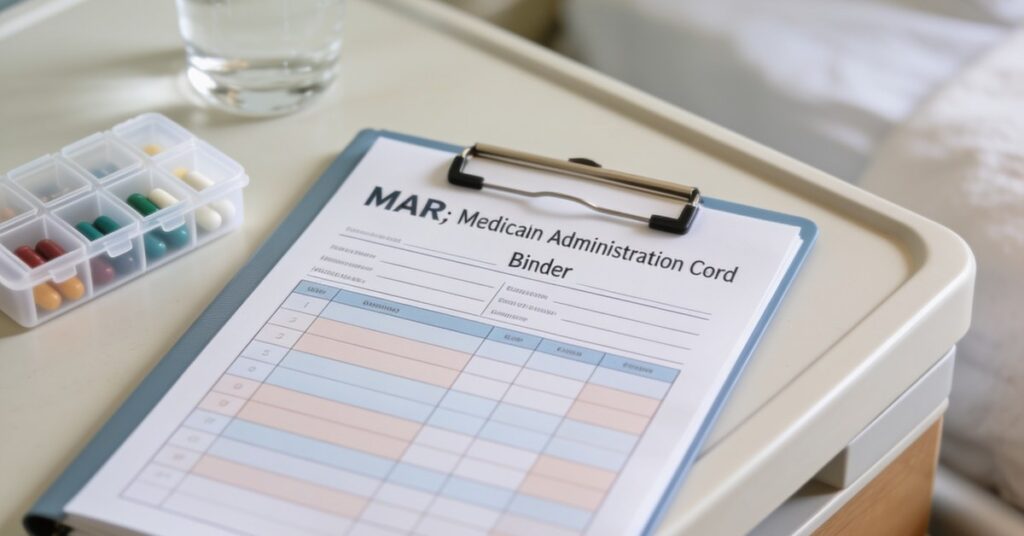
Applying these safety principles effectively relies on consistent, methodical habits performed during every medication round. To ensure safety, you should perform three checks of the medication label against the Medication Administration Record (MAR):
- Retrieve the medication and verify it against the MAR.
- Prepare the correct dose while double-checking the label.
- Perform the final verification at the patient’s bedside before administration.
Verification, Timing, and Dosage Accuracy in Medication Management
For non-verbal or confused patients, you must verify their identity by matching the hospital number on their wristband to the MAR. You should aim to administer all medications within a window of ± 30 minutes of the scheduled time to ensure stability in the patient’s condition. Additionally, always double-check your dosage calculations for high-alert medications, such as insulin, heparin, and opioids, and verify that the dosage is mathematically appropriate for the patient’s age, weight, and current kidney or liver function before proceeding.
Beyond the Basics: The Expanded 10 Rights of Medication Administration
The clinical framework for safety has expanded from the original five rights to a more comprehensive list of ten to better address the complexities of modern healthcare. These additional rights include the right documentation, the right to refuse, the right assessment, the right evaluation, and the right patient education. By incorporating these elements, caregivers ensure that the patient’s autonomy is respected and that their clinical response to palliative care is continuously monitored and understood.
Recognising and Preventing Medication Errors
Medication errors often occur when the standard verification processes are bypassed, such as failing to check the MAR or neglecting to verify a patient’s identity against their wristband. To keep your home care environment safe, consider these essential preparations:
- Keep a current, updated list of all medications and dosages.
- Maintain a clear, clutter-free space for medication preparation.
- Ensure emergency contact numbers for the hospice team are easily visible.
A particularly dangerous error is a 10-fold overdose, which frequently happens when a decimal point is misread, such as confusing 1.0 mg with 10 mg. To prevent this, always ask the patient to provide their full name aloud to confirm their identity whenever possible.
Remember: Always verify the dosage is mathematically correct and matches the prescription exactly, and confirm that the previous dose of the medication was not already administered by another caregiver.
Overcoming Challenges in Medication Safety and Healthcare Professional Coordination
Implementing these safety standards can be challenging due to environmental factors like high patient-to-nurse ratios or frequent interruptions that lead to cognitive lapses. Many families wonder how to handle the emotional toll of caregiving, but in my experience, taking small, scheduled breaks is essential for your own well-being and helps maintain the focus required for accurate symptom tracking. By fostering better information sharing and being aware of the risks posed by complex dosing math and staff fatigue, we can provide a higher quality of care that truly puts the patient’s wellbeing at the centre of every decision.
Frequently Asked Questions
Can a family caregiver safely manage the 5 Rights of Drug Administration at home?
Yes, family caregivers can safely manage medications by maintaining a strict, written schedule and following the three-check verification process. It is vital to keep open communication with the hospice team to ensure any changes in the prescribed regimen are clearly understood.
How should I store medications to prevent errors when multiple drugs are prescribed?
Keep all medications in their original packaging to ensure labels remain clear and avoid the use of generic pill organisers if look-alike names are a concern. Storing different medications in separate, clearly labelled containers can help prevent accidental mix-ups during busy care rounds.
What is the best way to handle a dose that was accidentally missed?
Do not attempt to double the next dose to make up for the missed one, as this can lead to toxic levels in the bloodstream. Contact your healthcare professional immediately to receive specific instructions on how to adjust the schedule for your loved one.
Are there specific tools to help with medication management for patients with dementia?
Yes, using visual aids such as timers or colour-coded charts can be very effective, provided they are cross-referenced daily with the official MAR. Always verify the patient’s identity before each administration, even if you are familiar with their routine, to ensure consistent safety.
Adhering to these evidence-based safety principles ensures your loved one receives the precise care they deserve while significantly reducing the risk of preventable errors. Consistently performing the three-check verification process remains your most effective tool for maintaining accuracy and peace of mind during the medication round.