Basal Cell Carcinoma on the Face: Why Surgery Isn't Always the First Choice
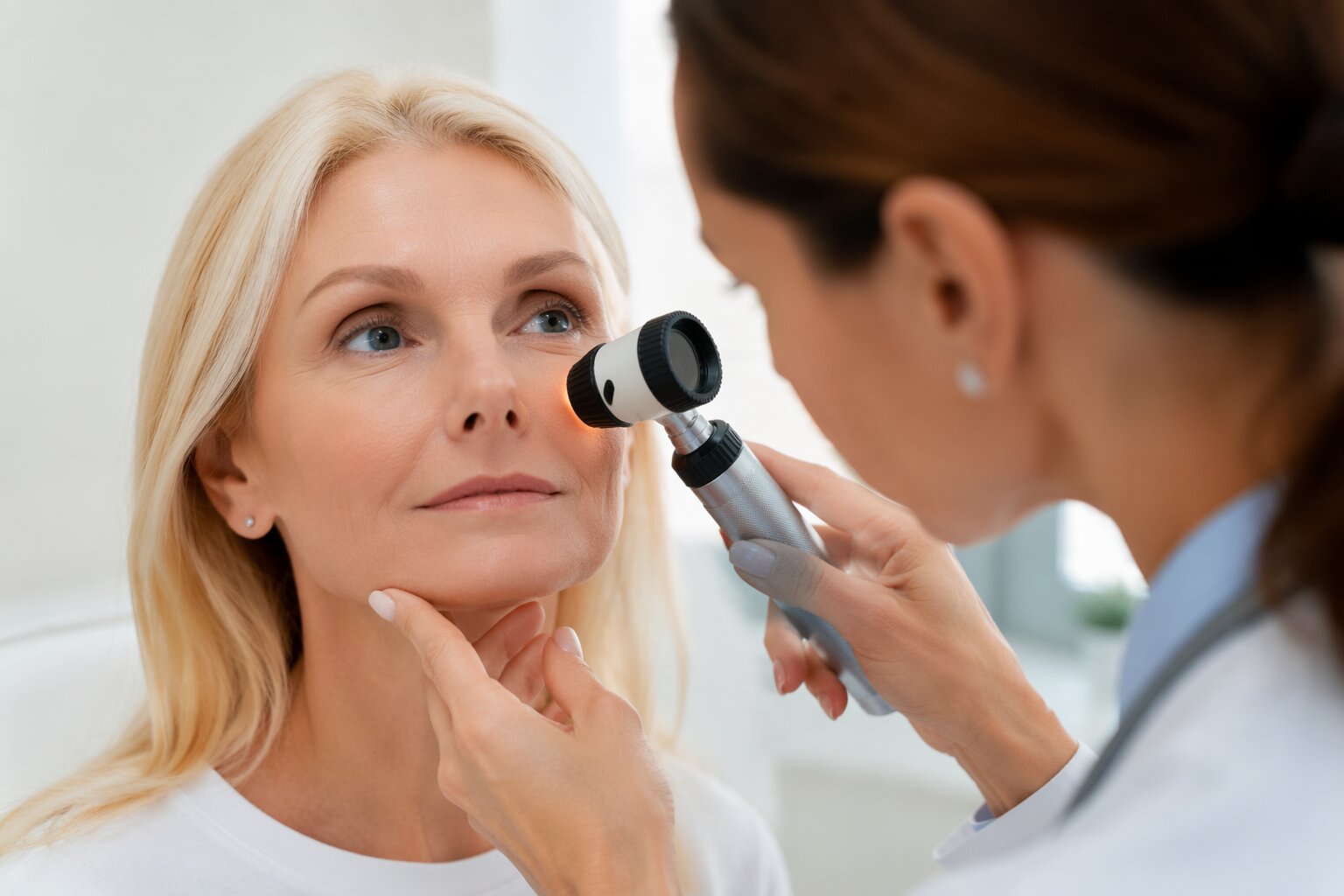
When you’re told you have a basal cell carcinoma on your face, it’s easy to assume surgery is the obvious next step. But that’s not always how dermatologists and surgeons see it. Depending on the size, depth, and exact location of your spot, you may have options that spare skin, minimize scarring, or avoid an operation entirely, each with its own trade-offs that can change what “best treatment” really means for you.
Why Small Facial Basal Cell Carcinomas Still Matter
Although small facial spots may seem easy to overlook, even “small” basal cell carcinomas are important to address because the visible portion on the skin can underestimate how far the tumor extends beneath the surface.
A lesion near the eye, nose, lip, or ear can follow natural skin folds or underlying structures, making later treatment more complex.
Because basal cell carcinoma usually grows slowly and is often related to long-term sun exposure, people may delay evaluation, assuming there's no urgency.
However, as it enlarges, it can progressively damage cartilage or bone, become more difficult to remove with clear margins, and increase the risk of recurrence.
This may ultimately necessitate more extensive surgery and reconstruction than would have been required with earlier treatment.
How Doctors Choose Treatments for Small Facial BCC
Two main considerations guide how doctors select treatment for a small basal cell carcinoma (BCC) on the face: the tumor’s biological risk and the importance of its location. Understanding these factors is an important part of choosing the right approach for effective non-melanoma skin cancer treatment, especially when balancing cancer removal with cosmetic outcomes.
Risk assessment includes tumor size, how clearly its edges can be seen, whether it appears confined to the upper layers of the skin, the specific BCC subtype, and any prior treatments. When a lesion appears genuinely low risk, small, well-defined, superficial, and in a patient without major complicating factors, doctors may discuss both surgical and nonsurgical options.
These can include excision, Mohs micrographic surgery, or, in selected cases, topical medications, cryotherapy, photodynamic therapy, or radiation. Facial location often raises the threshold for nonsurgical approaches. Areas close to the eyes, nose, lips, or ears, or lesions with indistinct or irregular borders, are more likely to be treated surgically to achieve better margin control and reduce the chance of recurrence.
In these higher-risk or cosmetically sensitive zones, techniques such as Mohs surgery are frequently preferred, even if the visible lesion is small, because they allow precise removal of cancerous tissue while sparing as much healthy skin as possible.
When Surgery Is the Best Choice for Facial BCC
When a basal cell carcinoma (BCC) develops on the face, surgery is often considered the most dependable option because it aims to completely remove the cancerous tissue rather than only shrinking or damaging it.
Mohs micrographic surgery is commonly recommended in situations where achieving the highest possible cure rate is a priority, with reported success rates approaching 99% for appropriately selected tumors.
Surgery is more likely to be advised when the biopsy indicates aggressive growth patterns, when the tumor margins are poorly defined, or when the lesion is located near structures such as the eyes, nose, lips, or ears.
The stepwise, mapped technique used in Mohs surgery allows the surgeon to examine 100% of the surgical margin and remove additional tissue only where cancer cells remain.
This approach helps conserve as much healthy tissue as possible while lowering the risk of recurrence.
When Non-Surgical Treatment Makes Sense for Facial BCC
Non-surgical treatment for facial basal cell carcinoma is generally considered in carefully selected, lower-risk cases or when surgery isn't advisable. Dermatologists typically look for tumors that are small, superficial, and well defined, and then evaluate how different treatments may affect appearance, comfort, daily activities, and existing medical conditions.
For individuals who wish to avoid surgery or aren't good surgical candidates, options may include prescription topical medications, cryotherapy (freezing with liquid nitrogen), radiation therapy, or photodynamic therapy. These methods may offer advantages such as avoiding incisions or reducing downtime, but they usually have lower cure rates and a higher likelihood of recurrence compared with surgical approaches.
Topical Creams: How They Treat Facial BCC
In some early, low-risk basal cell carcinomas (BCC) on the face, topical prescription creams can be used instead of surgery. These medications work by either stimulating the immune system to attack cancer cells or directly interfering with their growth, leading to the destruction of abnormal skin cells.
Treatment is usually applied at home once or twice daily, typically for several weeks (often around 3–6 weeks, depending on the drug and the doctor’s instructions).
During treatment, it's common to develop redness, irritation, scaling, and crusting in the treated area as the cancerous cells are destroyed. These reactions usually indicate that the medication is active, but the intensity can vary, and sometimes the regimen needs adjustment by the prescribing clinician.
After treatment, the area generally heals without a surgical scar, though the skin may remain slightly lighter or darker in color or have a different texture.
Topical creams are most appropriate for carefully selected, superficial, or otherwise low-risk BCCs in specific locations.
Clinical studies show that, while they can be effective in these situations, surgical methods (such as excision or Mohs surgery) generally have higher long-term cure rates and lower recurrence rates.
If residual cancer is suspected after a topical course, based on examination, biopsy, or continued abnormal appearance, further treatment is often required, which may include another topical course or a surgical or destructive procedure.
Photodynamic Therapy on the Face: Pros and Cons
Photodynamic therapy (PDT) is a non-surgical treatment option for certain basal cell carcinomas on the face. It involves applying a light-sensitizing cream or solution to the affected area and then activating it with a specific wavelength of light to selectively target and destroy cancer cells.
Because the skin isn't cut, there are no stitches, and the risk of a prominent surgical scar is generally lower, although treated skin may heal with some color change, appearing either lighter or darker than the surrounding area.
PDT has several limitations. Treatment typically requires multiple clinic sessions rather than a single visit.
During the healing process, it's common to experience redness, burning or stinging, swelling, and crusting or peeling of the skin.
In addition, PDT is usually reserved for low-risk, superficial tumors on the face. It isn't considered appropriate for deeper, more aggressive, or high-risk basal cell carcinomas, which are more often managed with surgical or other established treatments.
When Radiation Is Used for Facial Basal Cell Carcinoma
While photodynamic therapy is one nonsurgical option for certain superficial basal cell carcinomas, some facial tumors are better managed with radiation therapy. This approach uses carefully targeted high‑energy radiation to damage the cancer cells’ DNA, limiting their ability to grow and divide.
Radiation therapy is typically delivered in multiple small doses (fractions) over several weeks, rather than in a single session. Common short‑term side effects include redness, swelling, dry or scaly skin, and temporary hair loss in the treated area, as well as general fatigue.
The intensity and duration of these effects vary depending on the dose, treatment field, and individual sensitivity.
Long‑term changes can include skin thinning, changes in pigmentation, and, less commonly, cartilage damage or the development of new skin cancers in the irradiated area many years later. Regular follow‑up is important to monitor for recurrence or late effects of treatment.
If the cancer returns or new lesions develop, additional local treatments, such as surgery, topical therapies, or further radiation in selected cases, may be considered based on prior treatment and overall risk.
Surgery vs Non-Surgical for Facial BCC: Scars, Cure Rate, Cost
Most decisions between surgical and nonsurgical treatment for facial basal cell carcinoma (BCC) involve balancing scar appearance, likelihood of cure, and overall cost and convenience.
For many low‑risk facial BCCs, either approach may be reasonable, and the choice often depends on tumor features, patient health, and personal priorities.
Surgery generally provides the highest cure rates and the lowest risk of recurrence, because the visible tumor is removed along with a margin of surrounding tissue that may contain microscopic cancer cells.
However, surgical removal almost always results in a scar, the visibility of which depends on the tumor size, location, and the specific surgical technique.
Nonsurgical treatments (such as topical medications, photodynamic therapy, or radiation in selected cases) usually don't create a traditional surgical scar, though the treated area may heal with changes in pigmentation or texture.
These options may involve several weeks of applying creams or multiple treatment sessions, and can cause temporary redness, crusting, or irritation.
In contrast, surgery is often completed in a single outpatient visit, though it also requires a period of wound care and healing.
In terms of cost, surgical and nonsurgical approaches can vary depending on the healthcare system, insurance coverage, and the need for repeat treatments.
When considering options, it's important to review cure rates, cosmetic expectations, follow‑up requirements, and total costs with a dermatologist or Mohs surgeon to select an approach aligned with both medical needs and personal preferences.
Treating Facial BCC Near the Eyes, Nose, Lips, and Ears
Because the skin around the eyes, nose, lips, and ears is thin and closely associated with important structures (such as eyelids, tear ducts, cartilage, and nerves), basal cell carcinomas in these areas require particularly careful planning.
Even lesions that appear small on the surface can extend irregularly beneath the skin.
Mohs micrographic surgery is often preferred in these locations because it removes tissue in thin layers, evaluates 100% of the surgical margin under the microscope during the procedure, and aims to preserve as much healthy tissue as possible while maintaining high cure rates (commonly reported around 97–99% for many primary tumors).
Standard excision is also used, but precise margin control is essential to reduce the risk of recurrence and to minimize the size of the defect.
When nonsurgical treatments (such as topical therapies, radiation, or targeted medications) are considered, your team will typically weigh the benefits against a generally higher chance of the cancer returning compared with Mohs surgery or well-planned surgical excision, particularly in these high‑risk facial areas.
How Your Priorities and Questions Guide Your Facial BCC Treatment Choice
Facial BCC near structures such as the eyes, nose, lips, and ears often requires very precise treatment because these areas are functionally and cosmetically important. However, the most appropriate option still depends on your individual priorities, including how you balance the likelihood of cure with appearance, recovery time, and convenience.
If your main priority is achieving the highest cure rate and confirming that all cancer cells are removed, surgery (often Mohs micrographic surgery) is usually recommended. If you prefer to avoid or delay surgery, you might consider non‑surgical approaches such as topical treatments or cryosurgery, understanding that these options generally carry higher recurrence rates and may result in changes in skin color or texture.
It is useful to ask early whether your BCC is considered low‑risk or high‑risk, how many visits each treatment option will require, what type of scar or skin change is expected, and how much downtime, wound care, and temporary fatigue you should anticipate. This information can help you choose a treatment that aligns with your medical needs and personal preferences.
Conclusion
You’re not just treating a spot on your face; you’re protecting your health, appearance, and peace of mind. When you understand why surgery isn’t always first, you can weigh cure rates, scars, costs, and recovery in a way that fits your life. Ask every question, speak up about your goals, and make sure you’re comfortable with the plan. With thoughtful choices and good follow‑up, you’ll face your BCC and your future confidently.