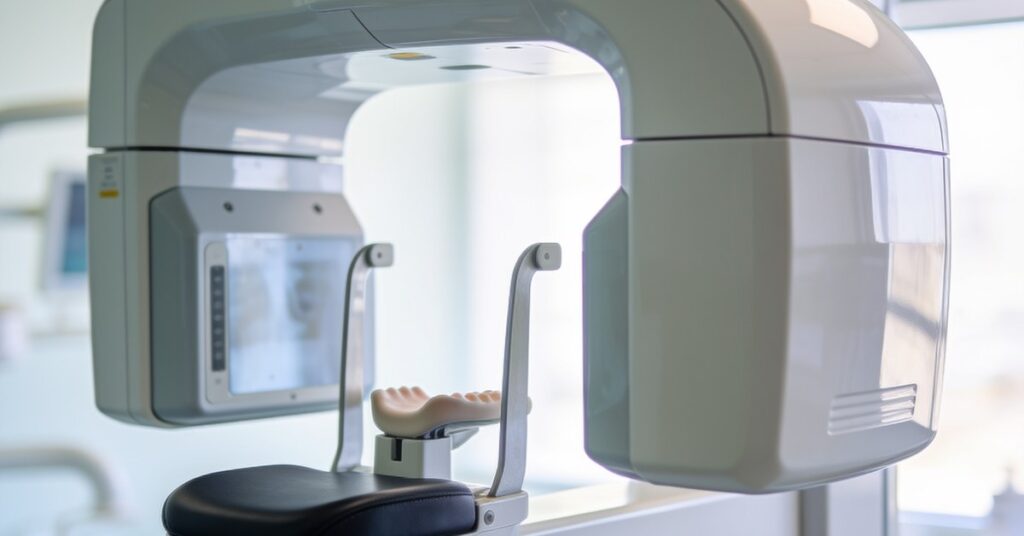
When you are navigating the complexities of caregiving or supporting a loved one, encountering unfamiliar medical acronyms like „What is OPG” can feel like another overwhelming hurdle in an already demanding journey. This guide provides a clear, compassionate explanation of what an Orthopantomogram is, helping you understand the procedure, why it is requested, and how to best prepare for a dental scan with confidence. By demystifying this common diagnostic tool, we aim to provide you with the practical clarity and peace of mind you need to focus on what matters most: the comfort and care of those you support.
An Orthopantomogram (OPG) is a two-dimensional (2D) panoramic dental X-ray that provides a comprehensive, single-image view of the entire mouth. It is a clinical diagnostic tool used by dentists, orthodontists, and doctors to map out the upper and lower jaws, all teeth, the temporomandibular joints (TMJ), and surrounding bone structures in one efficient scan. Understanding what is OPG helps you navigate the diagnostic process, ensuring that you feel prepared and informed when your loved one needs clinical dental imaging.
What is OPG
Definicja OPG
W większości przypadków skrót OPG odnosi się do ortopantomogramu. Jest to panoramiczne zdjęcie rentgenowskie jamy ustnej w formacie 2D, które pozwala na zobrazowanie całego uzębienia, w tym obu szczęk, stawów skroniowo-żuchwowych oraz struktur kostnych w jednym ujęciu.
Zastosowanie w stomatologii
Stomatolodzy wykorzystują skanowanie OPG do różnorodnych ocen stanu zdrowia jamy ustnej:
- Planowanie leczenia: Niezbędne przed założeniem aparatu ortodontycznego, wszczepieniem implantów lub ekstrakcją zębów mądrości.
- Diagnostyka: Pozwala wykryć ukryte ubytki, problemy z kośćmi szczęki, choroby dziąseł, guzy oraz torbiele.
- Monitoring rozwoju: Obserwacja wyrzynania zębów stałych u dzieci oraz sprawdzanie obecności zębów zatrzymanych.
Przebieg badania i bezpieczeństwo
Podczas badania urządzenie wykonuje powolny obrót o 360 stopni wokół głowy pacjenta, podczas gdy ten pozostaje w bezruchu, przytrzymując zębami specjalny ustnik. Cały proces trwa krótko, zazwyczaj od 10 do 20 sekund. Badanie jest bezbolesne, nieinwazyjne i wiąże się z ekspozycją na stosunkowo niską dawkę promieniowania.
Pamiętaj, aby skonsultować się z lekarzem, który doradzi najlepsze rozwiązanie w Twoim przypadku. Niniejszy tekst ma charakter informacyjny i nie zastępuje profesjonalnej porady medycznej.
Inne znaczenia skrótu OPG
W zależności od kontekstu lub branży, skrót OPG może również oznaczać:
- Ontario Power Generation: Jeden z głównych kanadyjskich producentów czystej energii elektrycznej.
- Osteoprotegerynę: Białko w ludzkim organizmie, które odpowiada za regulację gęstości kości i pełni rolę istotnego biomarkera w badaniach medycznych.
Clinical Indications and Diagnostic Value of OPG and Legal Responsibility
Dentists request an OPG to obtain a complete structural map of the oral cavity, which is essential for planning complex treatments or monitoring systemic health. It serves as a vital diagnostic aid in tracking jaw growth in children, identifying facial fractures, and spotting pathologies such as cysts, tumours, abscesses, or deep infections that might otherwise remain hidden.
The Role of OPG in Treatment Support and Document Preparation
This scan is frequently used to assess wisdom teeth for impaction or potential risks to adjacent teeth, and it provides the necessary imaging for dental implants, oral surgery, and orthodontics. By visualising the jawbone height and density, clinicians can effectively identify bone loss or sinus issues, ensuring that care plan decisions are both safe and tailored to the patient’s specific anatomical needs, much like how one might prepare a document for health-related support.
Comparison of Dental Imaging Techniques and Mental Capacity Considerations
| Feature | OPG (Panoramic) | Periapical X-ray |
|---|---|---|
| Scope | Entire mouth | 1-2 specific teeth |
| Application | Broad overview/planning | Detailed root diagnosis |
| Resolution | General structural view | High detail |
The Scanning Procedure, Power of Attorney, and Mental Capacity Act 2005
The OPG procedure is a quick, extraoral process that typically lasts only 15 to 20 seconds. During this time, the patient rests their chin on a small plastic shelf and bites onto a sterile, disposable mouthpiece while holding side handles for stability, allowing the machine’s external arm to rotate in a semicircle around the head to capture the image.
Important: Always ensure you bring your clinical referral and any previous X-rays to the appointment; without the referral, the imaging centre cannot legally proceed with the scan, and someone holding a power of attorney or deputyship may be required to sign the consent if the patient lacks mental capacity under the Mental Capacity Act 2005.
Essential Preparation Steps to Carry Out the Legal Requirements
- Arrive at the clinic 15 minutes before your scheduled appointment time.
- Remove all metal items, such as jewellery, eyeglasses, and hearing aids, from the head and neck area.
- Ensure any dental plates or removable appliances are taken out as instructed.
- Remain perfectly still during the 15-20 second rotation to avoid image blurring.
- Keep your tongue pressed firmly against the roof of your mouth throughout the scan.
Safety, Radiation, and the Office of the Public Guardian
Panoramic radiography is widely considered a safe diagnostic method because it requires the lowest radiation dose of all dental imaging techniques, with levels between 0.1 and 0.8 Millirem. This exposure is typically less than one day of natural background radiation, and it is important to note that a thyroid shield is not recommended during this specific procedure as it can interfere with the panoramic film quality.
Understanding Your Results and the Role of an Attorney
Interpreting an OPG involves a systematic review of the 2D image to count all teeth and check for abnormalities. Have you ever felt like you’re carrying the weight of the world on your shoulders? In my experience, even small tasks like reading a dental report can feel daunting, but breaking them down into simple observations helps. Look for these indicators:
- Bright white spots: Usually indicate dense materials like metal fillings or crowns.
- Dark gray or black spots: May reveal cavities, nerve canals, or decay.
- Dark circles at root tips: Often signal potential cysts or abscesses requiring palliative care or intervention.
- TMJ condyles: Checked for signs of wear, asymmetry, or dislocation.
Contact Information for Imaging Services
If you require an OPG scan, you may visit the 3Beam Imaging Centre located at Harley Street, London. For any questions regarding the referral process or to book your appointment, you can contact their team directly at 0207 637 8227.
Najczęstsze pytania (FAQ)
Is an OPG the same as the Office of the Public Guardian (OPG)?
No, they are entirely different entities that happen to share an acronym. In a medical context, an OPG is a dental X-ray, whereas the Office of the Public Guardian is a government body that manages legal responsibilities like power of attorney for those lacking mental capacity.
Why is my tongue position important during the scan?
Keeping your tongue pressed against the roof of your mouth is critical because a common technical error in OPG imaging occurs when the tongue is not positioned correctly. This error often causes shadows or distortions on the final image that can obscure vital anatomical details.
Are OPG results definitive for all dental issues?
While the OPG is excellent for broad overviews, it is a two-dimensional representation of three-dimensional structures and may be subject to overlaps. Your dentist may request additional, more focused imaging if further detail is required to carry out the legal or clinical care plan.
Can a legal representative accompany a patient for the scan?
Yes, a legal representative, attorney, or carer is welcome to accompany a patient to provide support during the procedure. It is helpful to ensure all referral documentation is clearly provided to the staff upon arrival to ensure a smooth administrative process.
Knowing exactly what is OPG allows you to support your loved one with confidence during their dental imaging appointment. Remember that keeping your tongue firmly against the roof of your mouth during the scan is the simplest way to ensure the clear results needed for effective care.