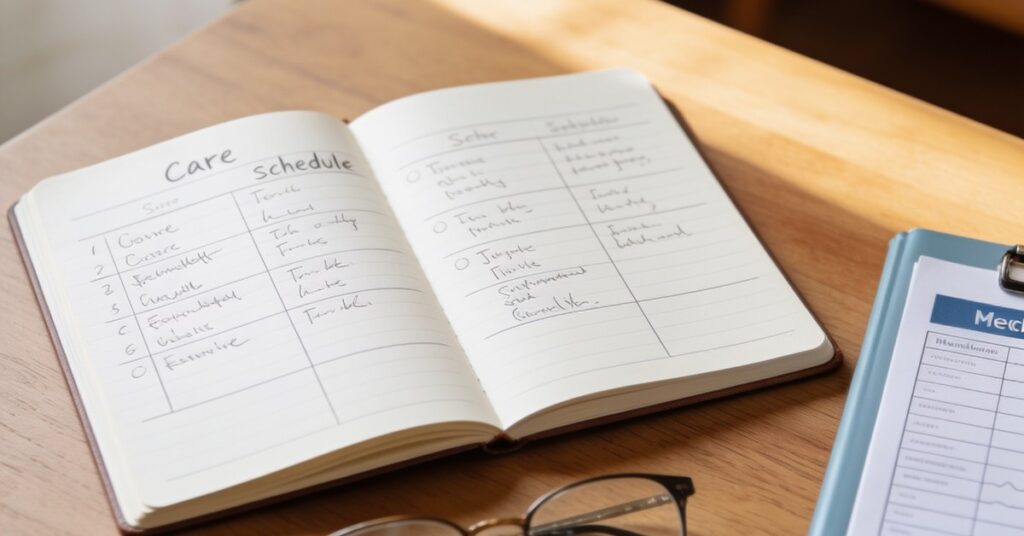
Navigating the complexities of end-of-life care requires a steady hand and a clear roadmap, as a well-structured Care Plan is often the most compassionate tool a family can provide for their loved one’s comfort. In this guide, I will share how to develop a comprehensive Care Plan Template that ensures your loved one’s unique needs and wishes are honoured with clarity and dignity. By following these professional insights, you will gain the practical confidence to manage daily support, coordinate care teams effectively, and focus your energy where it matters most: on the time spent together.
Understanding the Care Plan Template and its role in Social Care
A Care Plan Template is a standardised, structured document used to assess, record, and track an individual’s needs, acting as the primary reference point for everyone involved in a patient’s care. It is essential because it ensures continuity of care by aligning the actions of multiple doctors, nurses, and family caregivers, preventing fragmented communication when a patient’s condition evolves. By capturing personal preferences, hobbies, and individual priorities, it promotes person-centred care that treats the human being rather than just the medical diagnosis. Furthermore, this framework assists organisations in meeting legal and medical regulatory standards, providing a clear audit trail for the care provided.
While NHS England notes there is no national or set template for a personalised Care and Support plan, the document often originates from a local council if they formally identify an individual’s care and support needs. This document serves as a roadmap, including medical history, daily living requirements, and actionable interventions to ensure no detail is overlooked. It also provides a vital framework to establish measurable targets and track progress toward health improvements, offering a sense of stability during an unpredictable time. When you maintain a rigorous Care Plan, you reduce the cognitive load on yourself and provide a unified voice for the patient among various medical specialists.
Essential components of a comprehensive Care Plan Template
A comprehensive Care Plan must begin with the patient’s core identification and emergency contact details to ensure rapid, accurate communication during critical moments. Have you ever felt like you’re carrying the weight of the world on your shoulders while trying to keep track of every medical appointment? The following details are vital to include in your structure:
- Full name, date of birth, and NHS number.
- Primary contact details for next of kin and key family members.
- Current medication list with specific dosages and administration times.
- Documented symptom tracking logs and recent clinical observations like blood pressure.
- Clear Do Not Attempt Cardiopulmonary Resuscitation (DNACPR) status.
How to design a personalised Care Plan Template and Nursing Care Plans
You can create a professional and effective template by using standard software such as Google Docs or Microsoft Word to draft a document that covers six core sections: patient information, medical history, holistic needs assessment, SMART goals, actionable interventions, and a monitoring schedule. To navigate this process effectively, follow these steps:
- Gather all current medical records, including surgical history and active diagnoses.
- Define clear, achievable goals for daily living and symptom management.
- Draft your actionable interventions based on the patient’s current mobility and cognitive status.
- Schedule a formal palliative care Review meeting with your GP or hospice team to validate the plan.
- Store the digital or physical copy in a location accessible to all primary caregivers.
When setting objectives, define SMART goals as those that are Specific, Measurable, Achievable, Relevant, and Time-bound to ensure they remain realistic and trackable. For those requiring more specialised guidance, consult Macmillan Healthcare Professionals for oncology-specific templates or refer to the NHS England Personalised Care framework for official UK-specific guidance. As a practical starting point, you may use the Complete Care Plan [PDF] template, which provides a reliable structure that you can adapt to your specific circumstances or the needs of your loved one. Remember that this document is a living resource that must evolve alongside the patient’s journey.
Adaptation of the template for each healthcare setting
Care plans must be adapted to the specific healthcare setting to ensure the interventions are relevant to the environment. The following table highlights the focus areas for different care requirements:
| Setting | Primary Focus | Key Documentation |
|---|---|---|
| Acute Care | Clinical stability | Medical diagnosis and step-by-step implementation |
| Home Care | Safety and comfort | Home hazards and caregiver instructions |
| Palliative Care | Dignity and pain | Preferred place of care and emergency medications |
Palliative and end-of-life care plans are distinct, prioritising the preferred place of care, emergency medications, and specific resuscitation preferences to ensure comfort and dignity. To illustrate this, consider the profile of Margaret Thompson, an 85-year-old with osteoarthritis, mild cognitive impairment, and reduced mobility; her plan would detail a clinical assessment, such as a heart rate of 100 bpm, observed dyspnoea, restlessness, and guarding behaviour during movement. For those seeking a ready-made solution, resources such as Birdie provide a downloadable Free Care printable template pack that can be adapted for these various clinical and social environments, ensuring you have a solid foundation to build upon.
Digital tools for managing the format of Care and Support
Digital tools enhance the management of Care Plan templates by providing real-time data and integrated monitoring systems that manual paper records often lack. The mCare platform, for instance, includes integrated body maps, fluid and nutrition monitoring, oral hygiene tracking, and wound care tools, which are invaluable for maintaining high standards of care. For those in larger institutional settings, Person Centred Software provides the Connected Care Platform, which offers an IQ care intelligence tool, a Staff dependency tool, and a Nursecall messaging service to streamline communication; they can be reached for support at +44 1483 357657.
Benefits of standardised Nursing Care Plans and patient involvement
Standardised Care Plan templates significantly improve patient outcomes by enhancing the quality and completeness of nursing records, as evidenced by a 2021 study by E. Østensen, which has been cited by 20 sources. This systematic approach ensures that no vital information is missed, which is particularly important during transitions between care providers. Furthermore, a 2011 review by F. Mukoro, cited by 5 sources, indicates that active patient involvement in the planning process substantially improves the patient experience and overall satisfaction with NHS services.
Customising the statement of needs for elderly patients
Customising a Care Plan for elderly patients requires a focus on their specific Activities of Daily Living (ADLs), ensuring that requirements for bathing, dressing, eating, and mobility are clearly documented and reviewed. Many families wonder how to handle the emotional toll of caregiving, but in my experience, taking small, scheduled breaks is essential for your own well-being. When customising, consider these essential additions:
- Environmental risk assessment for grab rails and walking aids.
- Communication preferences for those with cognitive impairment.
- Cultural and religious needs that provide comfort.
Important: Remember: Always ensure the plan is updated regularly to reflect changes in the patient’s condition, as a stagnant document can lead to inappropriate care decisions. You should start by recording essential personal details like the name, date of birth, and contact information, then move to environmental risk assessments, including the use of walking frames and grab rails to prevent falls.
Frequently Asked Questions
How can a nurse ensure the Care Plan remains accurate during shift changes?
A nurse should utilise digital handover tools or a centralised log to update clinical observations immediately after each assessment. This ensures that the incoming team has the most current information regarding medication administration and symptom management.
What is the difference between a medical diagnosis and a nursing Care Plan statement?
A medical diagnosis identifies the specific disease, such as pneumonia, whereas a nursing Care Plan statement focuses on the patient’s response, such as impaired gas exchange. This distinction allows caregivers to implement specific, actionable interventions tailored to the patient’s current physical needs.
Are there specific legal requirements for an institutional Care Plan?
Yes, institutional settings must comply with local regulatory standards that mandate regular reviews and documented consent for all care interventions. These documents must be kept secure while remaining accessible to authorised staff to ensure compliance with data protection laws.
How do I handle a situation where a patient refuses to follow the guideline?
If a patient refuses care, you should document their choice and discuss the risks with them in a calm, supportive manner while respecting their autonomy. Always consult with the primary care team to see if the Care Plan can be adjusted to better align with the patient’s preferences while maintaining their safety.
Treat your Care Plan as a living document, updating it frequently to reflect your loved one’s changing needs with the compassion and clarity they deserve. By maintaining this clear roadmap, you ensure their dignity remains at the heart of every decision, providing peace of mind for both you and those you support.